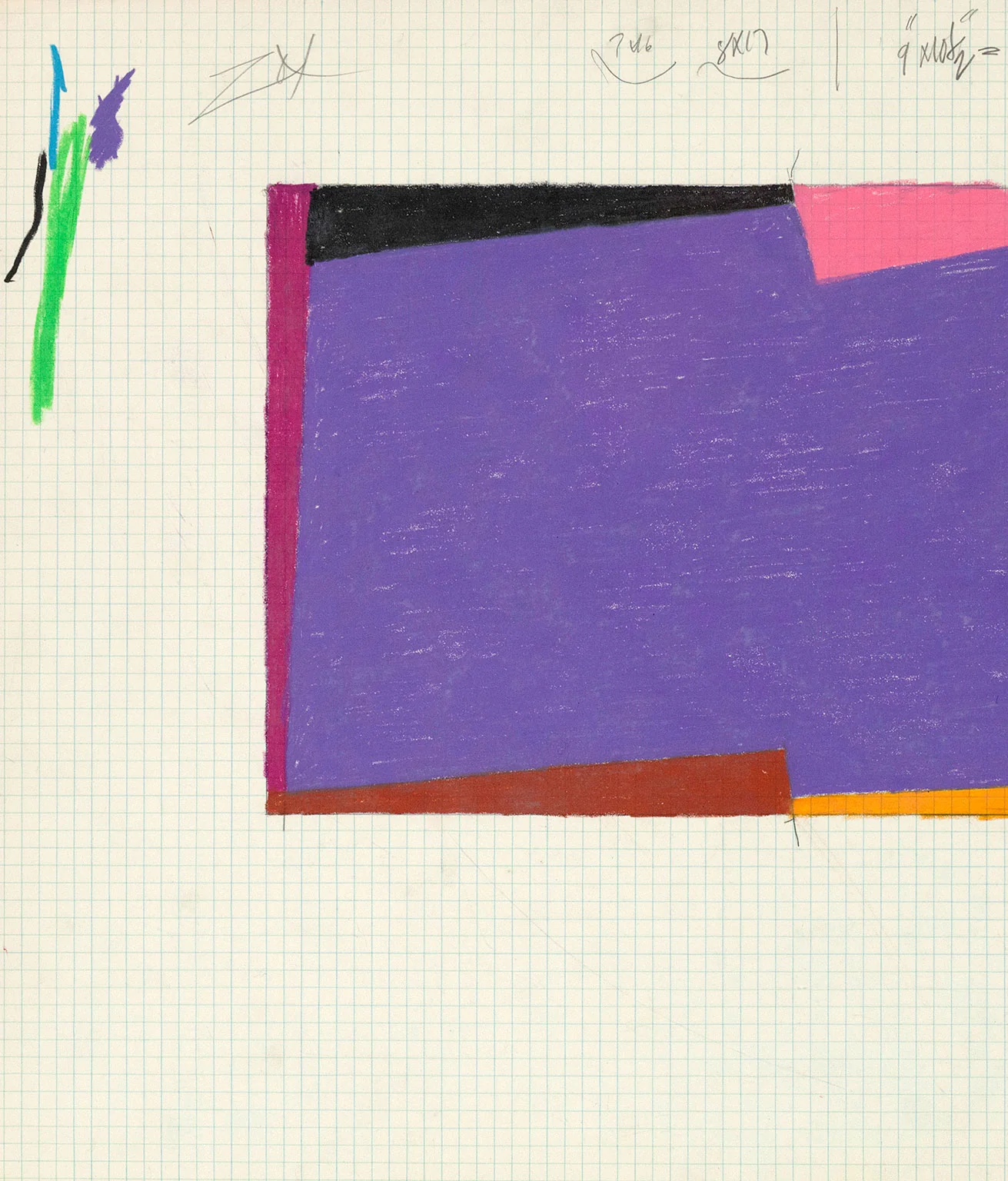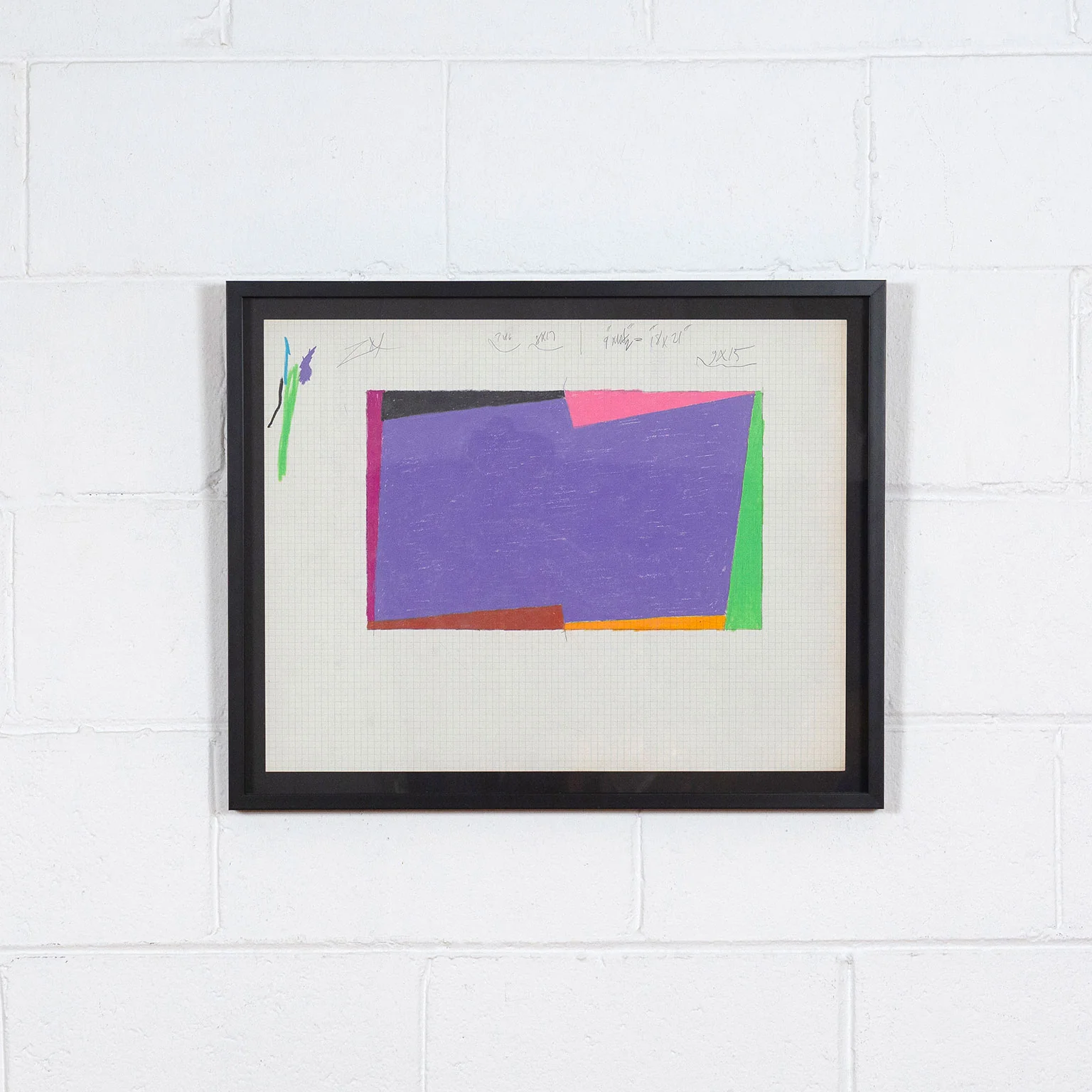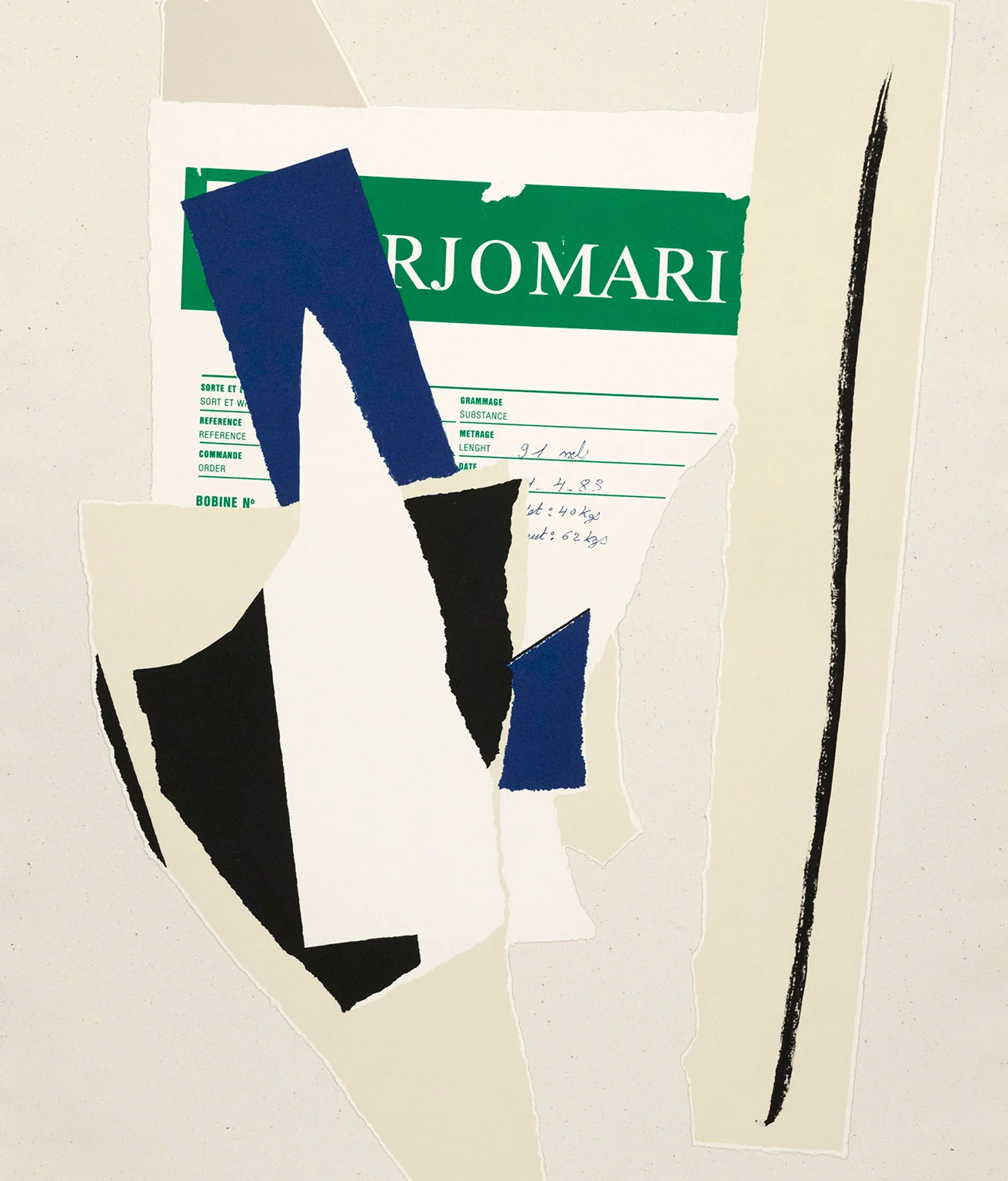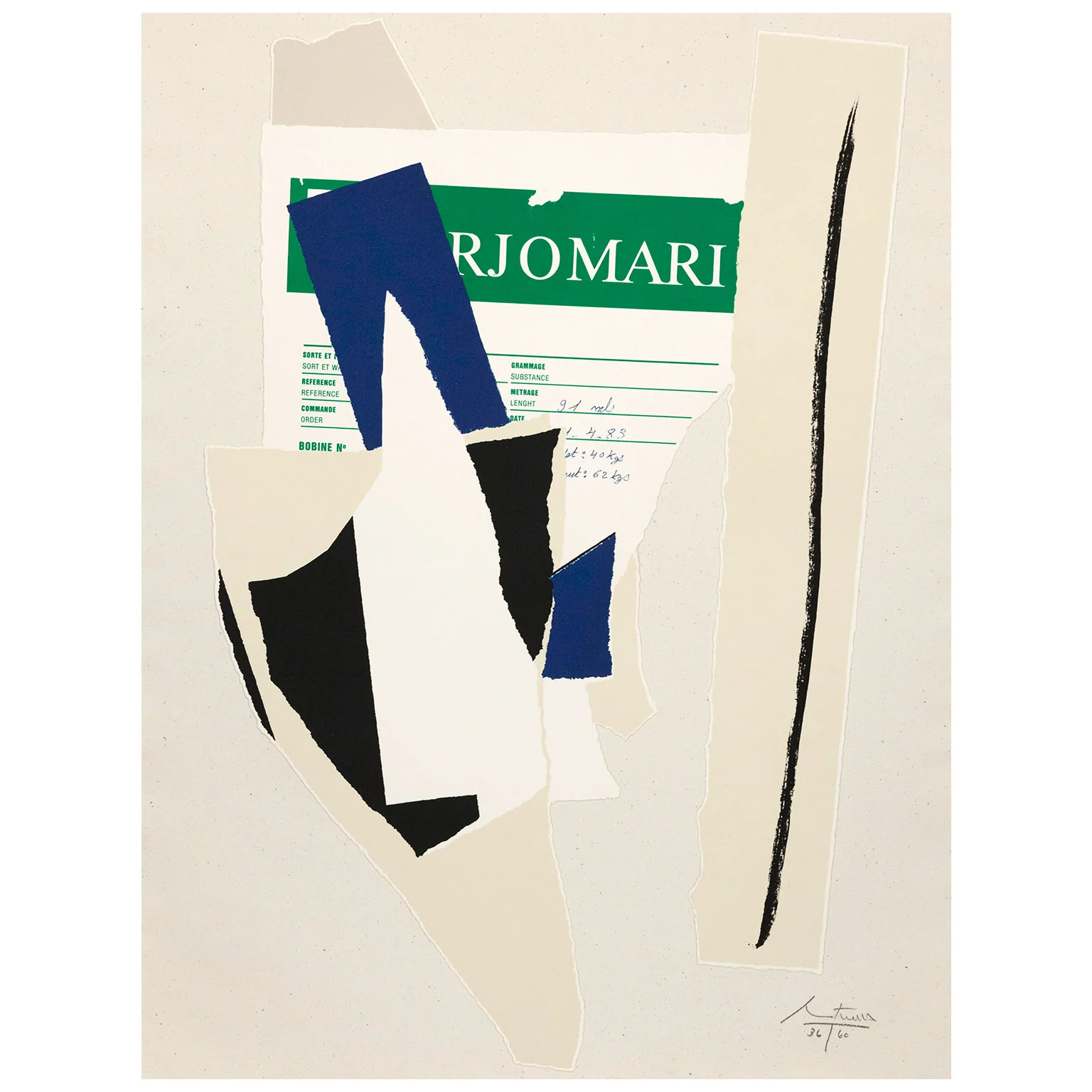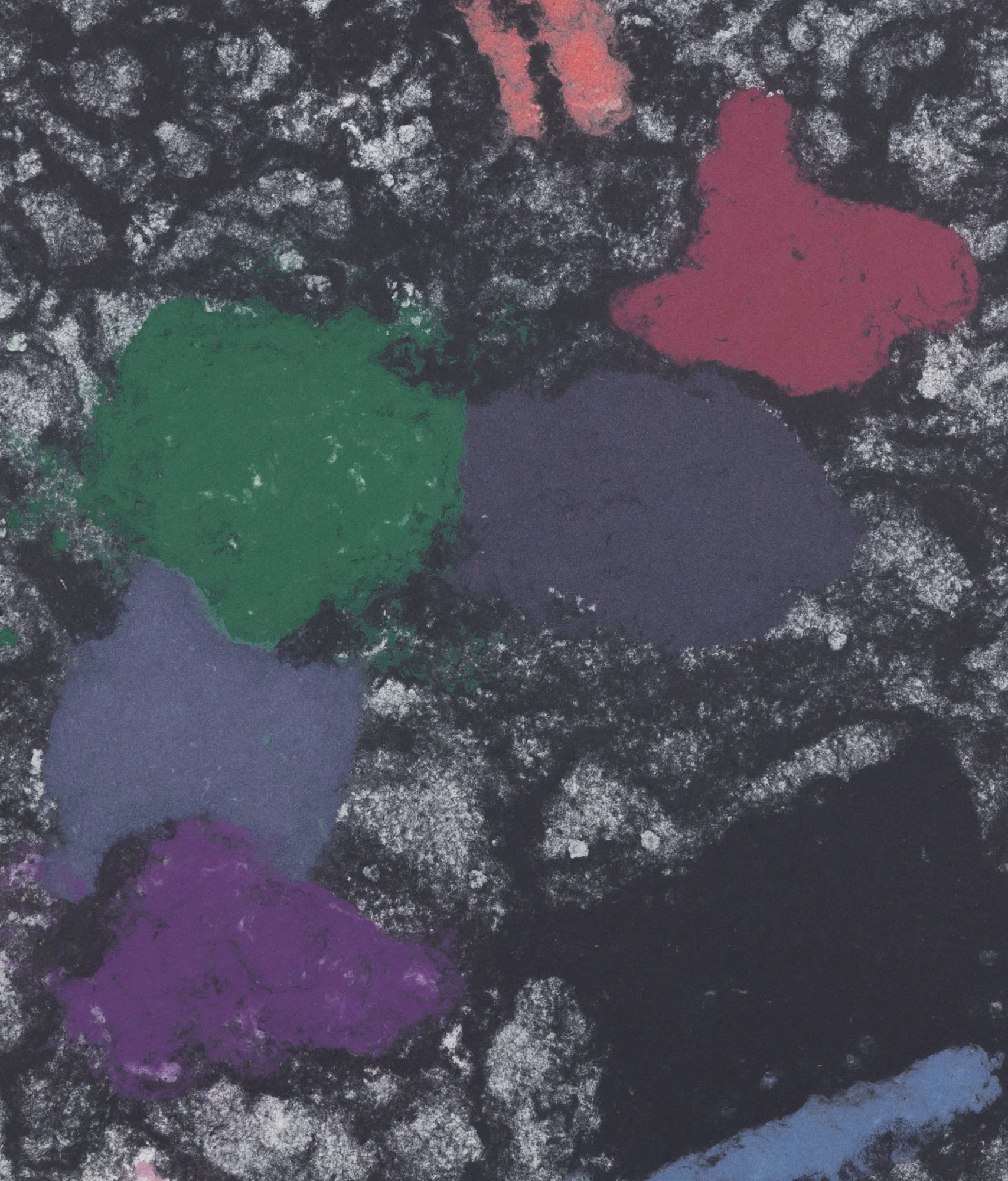
FRIEDEL DZUBAS "BLACK TONDO" MONOTYPE, 1982
Friedel Dzubas (1915-1994) was a Berlin-born, American abstract painter and a key artist associated with both the New York School and the Color Field movement.
Dzubas studied art in Germany before fleeing the Nazis in 1939 and settling in New York City. During the 1940s, Dzubas circulated with some of the leading abstract painters in the city's vital art scene, including Jackson Pollock, Willem de Kooning, Franz Kline, and Katherine Dreier. Dzubas participated in the legendary 9th Street Art Exhibition in 1951, a groundbreaking art exhibit featuring a number of his boundary-pushing contemporaries. This exhibition acted as an introduction to the New York School of postwar avant-garde artists.
Dzubas worked in close proximity to, and was strongly influenced by the emerging color field painters. He shared a studio with Helen Frankenthaler as she began pouring and staining her canvases. The two evolved and each surpassed the techniques embraced by the Abstract Expressionists.
This work is exemplary of Dzubas' use and love of powerful colors. The painter did not delve into printmaking with the same intensity as his contemporaries. However like many of the leading American artists in the late 1970s and early 1980s he did experiment with cast pulp paper, a process in which paper is pulverized and pressed into moulds. The technique was embraced for its texture and the unique way in which colors were absorbed and presented.
Dzubas worked collaboratively with Garner Tullis-an innovative printmaker fascinated with paper-making. Tullis opened the International Institute of Experimental Printmaking in Santa Cruz in 1972, where he emphasized paper-making and collaboration with friends, contemporaries, and emerging artists. This monotype was created in Tullis' workshop.
This work is a fine example of the artist's abstract use of color and form. A black-and-grey shroud anchors several floating shapes of pink, purple, periwinkle, green, salmon, and black. This composition is arranged in a way that evokes movement, and is visually alluring in its dark hues.
Today Friedel Dzubas' works hang in the permanent collections of some of the most prestigious art institutions in the world; including, the Whitney Museum (NY), the Guggenheim (NY), the Smithsonian American Art Museum (NY), and the Albright-Knox (Buffalo).
Questions about this piece? Contact us, call 416.704.1720, or visit our Toronto gallery.
Untitled, aka Black Tondo (GT/FD 1982 W2)
USA, 1982
Unique cast paper pulp monotype
Signed and dated in pencil by the artist, bottom margin
33.75" (diameter)
37.5"H 37.5"W (framed)
Newly framed with non-reflective museum glass
Printed at the Garner Tullis Workshop (California)
Published by Experimental Printmaking, San Francisco
Very good condition
Friedel Dzubas (1915-1994) was a Berlin-born, American abstract painter and a key artist associated with both the New York School and the Color Field movement.
Dzubas studied art in Germany before fleeing the Nazis in 1939 and settling in New York City. During the 1940s, Dzubas circulated with some of the leading abstract painters in the city's vital art scene, including Jackson Pollock, Willem de Kooning, Franz Kline, and Katherine Dreier. Dzubas participated in the legendary 9th Street Art Exhibition in 1951, a groundbreaking art exhibit featuring a number of his boundary-pushing contemporaries. This exhibition acted as an introduction to the New York School of postwar avant-garde artists.
Dzubas worked in close proximity to, and was strongly influenced by the emerging color field painters. He shared a studio with Helen Frankenthaler as she began pouring and staining her canvases. The two evolved and each surpassed the techniques embraced by the Abstract Expressionists.
This work is exemplary of Dzubas' use and love of powerful colors. The painter did not delve into printmaking with the same intensity as his contemporaries. However like many of the leading American artists in the late 1970s and early 1980s he did experiment with cast pulp paper, a process in which paper is pulverized and pressed into moulds. The technique was embraced for its texture and the unique way in which colors were absorbed and presented.
Dzubas worked collaboratively with Garner Tullis-an innovative printmaker fascinated with paper-making. Tullis opened the International Institute of Experimental Printmaking in Santa Cruz in 1972, where he emphasized paper-making and collaboration with friends, contemporaries, and emerging artists. This monotype was created in Tullis' workshop.
This work is a fine example of the artist's abstract use of color and form. A black-and-grey shroud anchors several floating shapes of pink, purple, periwinkle, green, salmon, and black. This composition is arranged in a way that evokes movement, and is visually alluring in its dark hues.
Today Friedel Dzubas' works hang in the permanent collections of some of the most prestigious art institutions in the world; including, the Whitney Museum (NY), the Guggenheim (NY), the Smithsonian American Art Museum (NY), and the Albright-Knox (Buffalo).
Questions about this piece? Contact us, call 416.704.1720, or visit our Toronto gallery.
Untitled, aka Black Tondo (GT/FD 1982 W2)
USA, 1982
Unique cast paper pulp monotype
Signed and dated in pencil by the artist, bottom margin
33.75" (diameter)
37.5"H 37.5"W (framed)
Newly framed with non-reflective museum glass
Printed at the Garner Tullis Workshop (California)
Published by Experimental Printmaking, San Francisco
Very good condition
Description
Friedel Dzubas (1915-1994) was a Berlin-born, American abstract painter and a key artist associated with both the New York School and the Color Field movement.
Dzubas studied art in Germany before fleeing the Nazis in 1939 and settling in New York City. During the 1940s, Dzubas circulated with some of the leading abstract painters in the city's vital art scene, including Jackson Pollock, Willem de Kooning, Franz Kline, and Katherine Dreier. Dzubas participated in the legendary 9th Street Art Exhibition in 1951, a groundbreaking art exhibit featuring a number of his boundary-pushing contemporaries. This exhibition acted as an introduction to the New York School of postwar avant-garde artists.
Dzubas worked in close proximity to, and was strongly influenced by the emerging color field painters. He shared a studio with Helen Frankenthaler as she began pouring and staining her canvases. The two evolved and each surpassed the techniques embraced by the Abstract Expressionists.
This work is exemplary of Dzubas' use and love of powerful colors. The painter did not delve into printmaking with the same intensity as his contemporaries. However like many of the leading American artists in the late 1970s and early 1980s he did experiment with cast pulp paper, a process in which paper is pulverized and pressed into moulds. The technique was embraced for its texture and the unique way in which colors were absorbed and presented.
Dzubas worked collaboratively with Garner Tullis-an innovative printmaker fascinated with paper-making. Tullis opened the International Institute of Experimental Printmaking in Santa Cruz in 1972, where he emphasized paper-making and collaboration with friends, contemporaries, and emerging artists. This monotype was created in Tullis' workshop.
This work is a fine example of the artist's abstract use of color and form. A black-and-grey shroud anchors several floating shapes of pink, purple, periwinkle, green, salmon, and black. This composition is arranged in a way that evokes movement, and is visually alluring in its dark hues.
Today Friedel Dzubas' works hang in the permanent collections of some of the most prestigious art institutions in the world; including, the Whitney Museum (NY), the Guggenheim (NY), the Smithsonian American Art Museum (NY), and the Albright-Knox (Buffalo).
Questions about this piece? Contact us, call 416.704.1720, or visit our Toronto gallery.
Untitled, aka Black Tondo (GT/FD 1982 W2)
USA, 1982
Unique cast paper pulp monotype
Signed and dated in pencil by the artist, bottom margin
33.75" (diameter)
37.5"H 37.5"W (framed)
Newly framed with non-reflective museum glass
Printed at the Garner Tullis Workshop (California)
Published by Experimental Printmaking, San Francisco
Very good condition